
DIY project for tabletops with a live edge: Make your own tabletop
DIY project for a live-edge tabletop: Make your own tabletops
Working with a live-edge slab offers the perfect opportunity to unleash your creativity and create a unique and beautiful piece of furniture. This guide provides helpful tips on how to successfully complete your DIY project with a live-edge slab.
Preparation: Protective equipment and tools
Before you begin your DIY project, it's important to equip yourself with the appropriate protective gear. Gloves, safety glasses, and a respirator are mandatory, especially when sawing or sanding, as these activities produce harmful dust.
Protective equipment: Safety first
- Gloves: Protect against splinters and injuries.
- Safety goggles: Protect the eyes from dust and flying wood chips.
- Respiratory mask: Filters the fine dust that is produced during sanding.
Necessary tools: What you need
- Table saw or jigsaw: For roughly cutting the board to size.
- Belt sander or random orbital sander: For smoothing the surface.
- Drill and screwdriver: For assembling table legs or other building components.
With this basic equipment, you can implement your DIY project safely and efficiently.
Size and shape: Defining the design
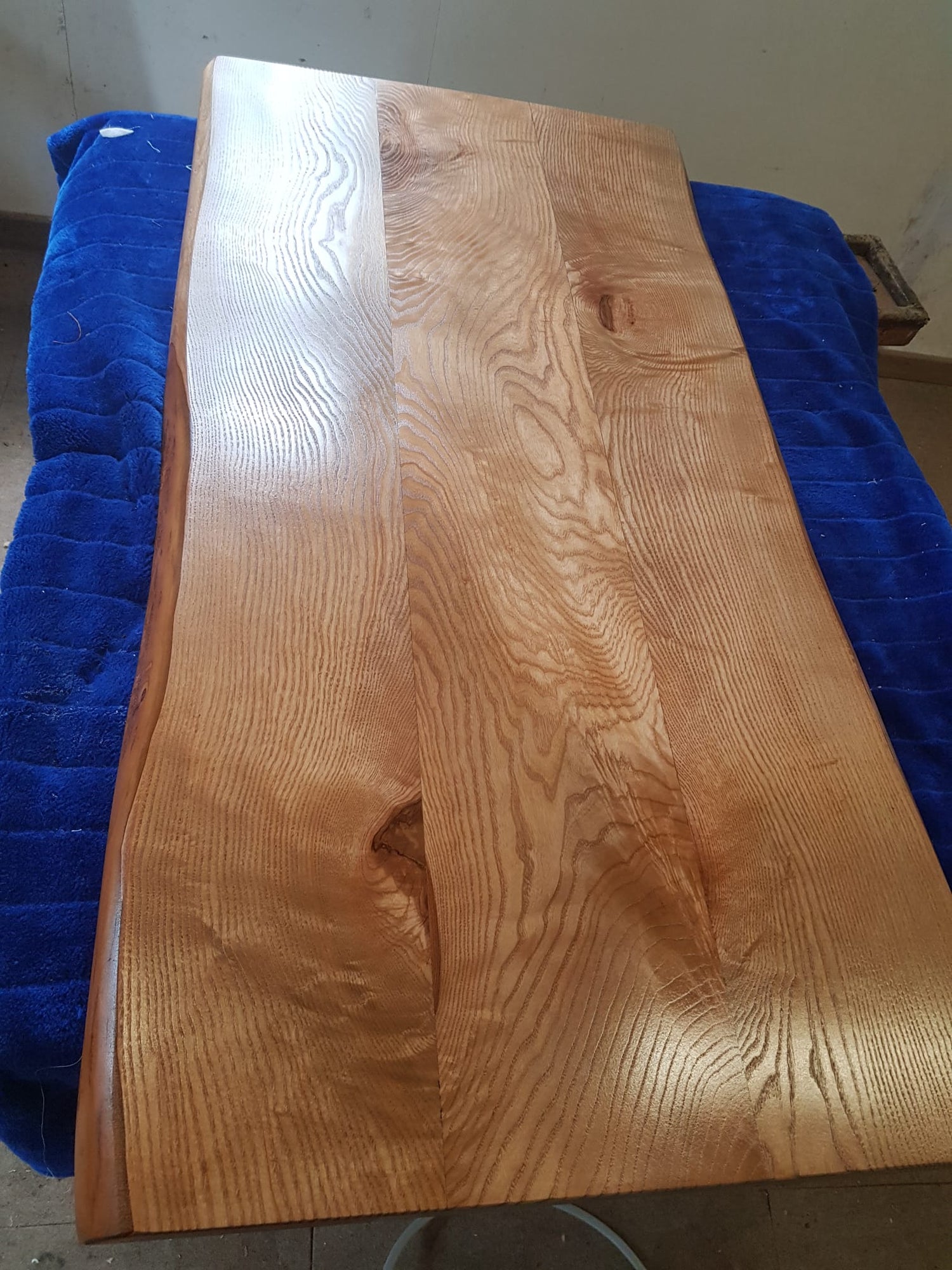
A live edge slab impresses with its natural shape, which is usually irregular and unique.
Planning: Dimensions and adjustments
- Measure the room: Consider where the piece of furniture should be placed.
- Maintain the natural shape: Preserve the characteristic look of the tree edge.
If necessary, you can cut the slab to size. Remember that the natural shape of the tree edge gives the wood its unique character.
The choice of wood type: character and color
The type of wood is crucial for the appearance and longevity of your piece of furniture.
Popular wood types for live edge panels
- Wild oak: A light-colored wood with a distinctive grain, particularly robust and durable.
- Acacia: Known for its darker hues and its hardness, which makes it resistant to scratches.
In our online shop for custom-made furniture you will find a large selection of live edge slabs that you can design according to your individual ideas.
Surface treatment: Protection and care
After sanding the live edge slab, you should decide how you want to treat the surface.
Surface treatment options
- Oiling: This accentuates the natural grain and gives the wood a warm, matte finish. However, oiled surfaces require regular maintenance.
- Varnishing: Provides a hard protective layer that makes the wood more resistant to scratches and moisture. Varnished surfaces are easy to care for, but can affect the natural feel of the wood.
Make sure to protect the wood from moisture to ensure the longevity of your furniture.
Table legs and base: Stability meets design
The choice of table legs or base is a crucial point in your DIY project.
Materials and styles for table legs
- Metal legs: Give a rustic wooden table a modern touch.
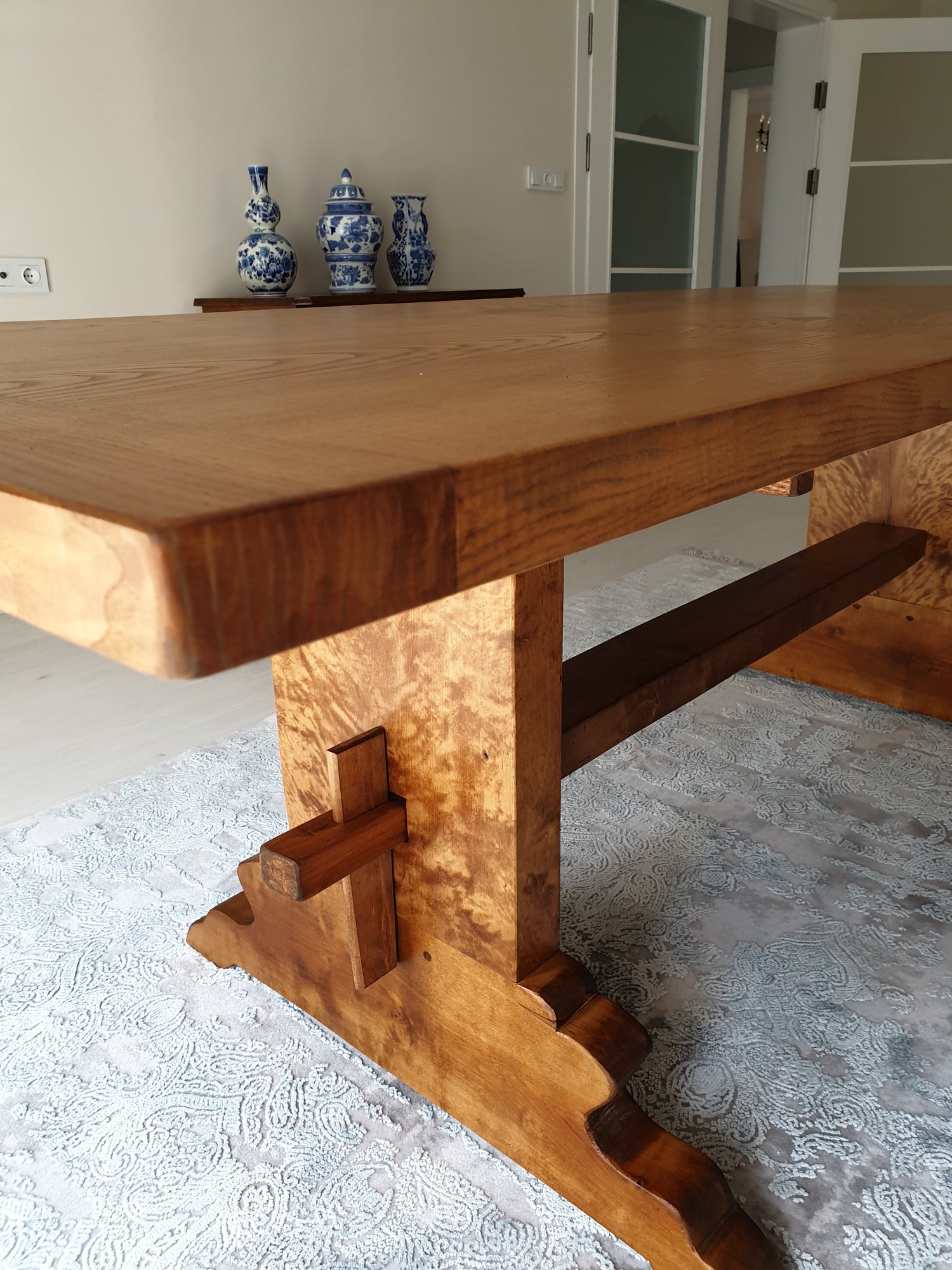
- Wooden legs: Continue the natural theme and harmonize particularly well with the tree edge.
It is important that the legs not only match the tree edge visually, but are also stable enough to support the weight of the slab.
Individualization: Creativity without limits
Make your DIY furniture piece truly special by customizing it.
Ideas for personal touches
- Decorative handles or carvings: For a unique design.
- Material mix: Combine wood with metal, glass or stone.
- Colorful accents: Use colors to create contrasts.
There are no limits to your creativity!
Final thoughts: Unique furniture made by yourself
A DIY project using a live-edge slab offers the perfect opportunity to create something unique and personal. With a bit of skill and the right tools, you can design a piece of furniture that is both functional and aesthetically pleasing. Take advantage of the natural beauty of the wood and give your home a distinctive look!
Feel free to share your creations with us on Facebook or Instagram and let us be a part of your successes!
FAQ: Frequently asked questions about the DIY project with live edge
1. What tools do I need for my DIY tree edging project?
You will need a saw (table saw or jigsaw), a belt sander or random orbital sander, and a drill for attaching the table legs. You should also wear protective clothing such as gloves and safety glasses.
2. What is the best way to protect my live edge slab?
You can either oil or varnish your live edge wood. Oil gives the wood a warm, natural look, but needs to be refreshed regularly. Varnish offers a durable protective layer, but is less natural in appearance.
3. How do I choose the right type of wood for my live edge panel?
The choice of wood depends on your personal taste and desired look. Wild oak is robust and light in color, while acacia is darker and more durable. Both types of wood are available in our online shop.
4. Can I attach the table legs myself?
Yes, you can easily attach table legs or a base yourself. Make sure the legs are sturdy and appropriately sized for the live-edge tabletop. Alternatively, we also offer custom-made table solutions.
5. What size should my live edge slab be?
The size of your live-edge slab depends on the room where the piece of furniture will be placed. Measure the available space and ensure that the piece fits well in the room without overwhelming it.
With these tips and answers, nothing stands in the way of your DIY project with a live edge!
Alternatively: Buy a ready-made table directly.
If you don't want to build a table yourself, you can either choose a high-quality tabletop or buy a ready-made table.
Solid wood tabletops
Discover our range of tabletops in various types of wood:
Table tops made of solid wood in oak or ash
Finished tables made of solid wood
Our finished solid wood tables offer various options, including different legs and wood types such as oak and ash: