Gluing wood: The 5 most common mistakes and how to avoid them
Share
How to glue wood correctly - tips and common mistakes
Introduction
Is the chair leg broken? Is the drawer falling apart? Or perhaps you're working on a small woodworking project – a toy for the children?
We'll show you how to properly glue wood and highlight five common mistakes you should definitely avoid. You can find more information about high-quality wooden tabletops and vanity tops on our website .
Common mistakes when gluing wood
Mistake 1: Using the wrong glue
There are many adhesives that work well for wood because they can penetrate the fibers. However, wood doesn't absorb as much liquid as materials like foam or polystyrene.
The safest way is always wood glue, as it absorbs shear and thrust stresses, especially in areas exposed to temperature fluctuations and moisture.
It's often said that "wood works," meaning it expands when exposed to moisture and contracts when it dries. Suitable wood products, such as solid wood tabletops or tables , can improve the quality of your projects.
Mistake 2: Using interior glue outdoors
The correct glue classification
Problems arise when wood glue intended for indoor use is used outdoors. Weather conditions such as rain and temperature fluctuations can weaken the bond and, in the worst case, cause the glue to fail.
There is a European standard DIN EN 204 that classifies wood glues into classes:
- D1: Dry indoor area
- D2: Occasional, short-term exposure to water indoors
- D3: Frequent, short-term exposure to water indoors
- D4: Frequent, long-term exposure to water indoors and outdoors, provided a surface protection is applied.
How do you choose the right glue?
This classification will help you choose the right glue for your project. Make sure to check whether the glue is suitable for indoor or outdoor use to ensure long-term stability. You'll find the details on every package.
Mistake 3: Poor preparation
Clean surfaces
Before applying the adhesive, ensure the surfaces are dry, dust-free, and grease-free. Clean them with a damp cloth. Acetone is suitable for degreasing, but please do not use nail polish remover, as this can impair the adhesive strength.
Keep the cloth nearby to remove excess glue and keep the tip of the glue tube clean. This will make it easy to open the cap later. This technique is particularly helpful when repairing washbasins .
Tools for preparation
Use high-quality tools and cleaning aids to achieve optimal adhesive bonding. Proper preparation will help you avoid problems later.
Error 4: Pressing time too short
Why pressing time is important
Some glues harden quickly, like superglue. Others take longer. For most wood glues, about 30 minutes is sufficient.
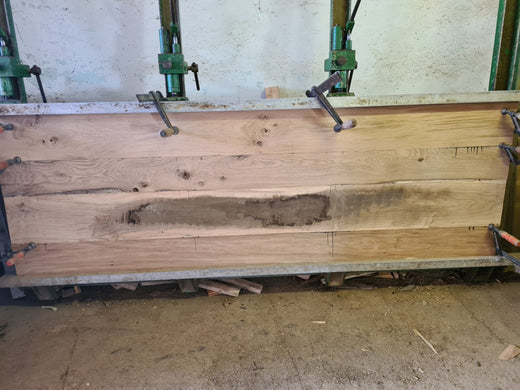
Always secure the adhesive well, as applying pressure by hand for 30 minutes is tiring, and the parts can slip. Clamps are a great help here.
Tips for fixing
Use tools such as clamps or tape to keep the connection stable. Ensure that the pressure is evenly distributed.
Mistake 5: Not waiting for final strength
Patience pays off.
After gluing, the wood absorbs moisture from the glue. The bond only reaches its full strength after a few days, once the moisture has evaporated.
So, if you have repaired a chair leg, give the joint a few days to fully cure.
Long-term durability
The longer you give the connection time, the more stable it will become. This is especially true for load-bearing structures.
Conclusion
If you avoid these mistakes, gluing your wooden structure should go smoothly. You can find further inspiration and high-quality materials on our website .
FAQ
Which adhesives are best suited for wood?
Wood glue is the safest choice, as it absorbs shear and thrust stresses particularly well.
How do I know which wood glue is suitable for my project?
Pay attention to the DIN EN 204 classification on the packaging. This indicates whether the glue is suitable for indoor or outdoor use.
How long should I let wood glue dry?
The pressing time is usually about 30 minutes, but full strength is only achieved after a few days.
What to do if excess glue oozes out of the glued joint?
Remove excess glue immediately with a damp cloth before it dries.
Where can I find high-quality wood products?
Visit our solid wood tabletop , vanity , and table collections for inspiration.