
Build your own table: Instructions for your DIY project
Build your own table: Here's how to successfully complete your DIY project step by step.
Do you dream of a dining table that fits perfectly in your home? With the right planning and a little DIY skill, you can build your own table. This guide shows you how to calculate the size of your table, choose the right wood, and assemble it in a stable and aesthetically pleasing way. A custom DIY table not only saves you money but also makes a unique design statement.
Building your own table: Planning your project
A good table should be stable, aesthetically pleasing, and perfectly suited to your space. The first important decision, therefore, concerns the size. This depends primarily on how much space you have available and how many people the table is intended to seat.
Calculate size
- Seating space per person : Plank approximately 60 cm wide and 40 cm deep.
- Recommended dimensions : A table measuring 120 x 80 cm seats four people. A length of approximately 180 cm is suitable for six people.
Legroom and table height
- Standard height : Approximately 76 cm, suitable for most chairs.
- Space between chair and tabletop : At least 30 cm for comfortable seating.
Types of wood for DIY tables: Which wood is best suited?
A high-quality dining table should be robust, durable, and easy to work with. The choice of wood type is crucial for both appearance and longevity.
Hardwoods for dining tables
- Oak, beech, ash, walnut : Impact and scratch resistant, ideal for durable tables.
- Pine or recycled wood : Perfect for the robust industrial look.
Tabletop thickness
- For stability , a thickness of at least 27 mm is recommended, especially for large tables.
DIY: How to properly cut and prepare a tabletop
Once you've found the right type of wood, it's time to cut the tabletop to size.
Procedure for cutting
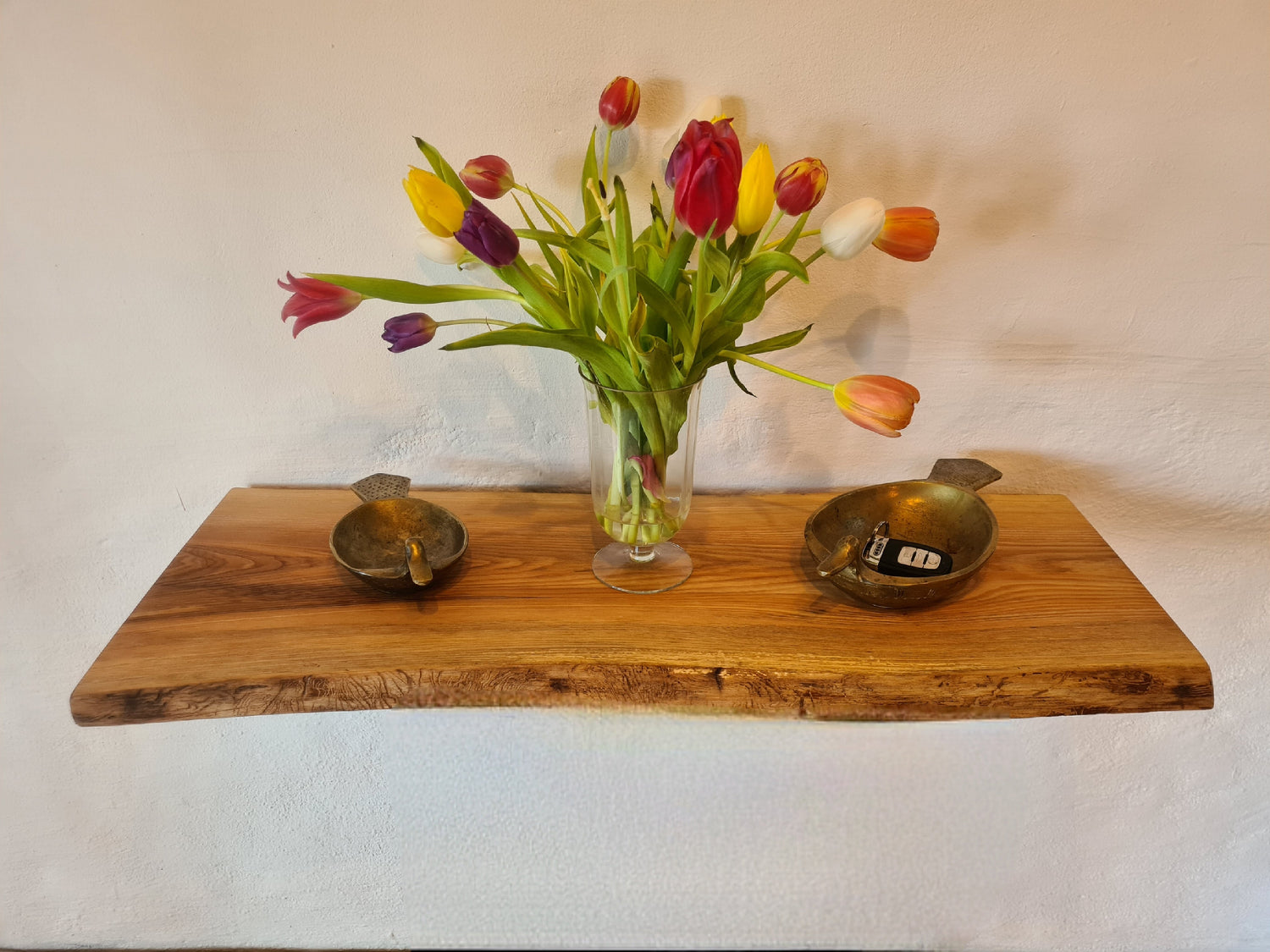
- Pre-cut tabletops : Available in various shapes, such as rectangular, round or with a live edge.
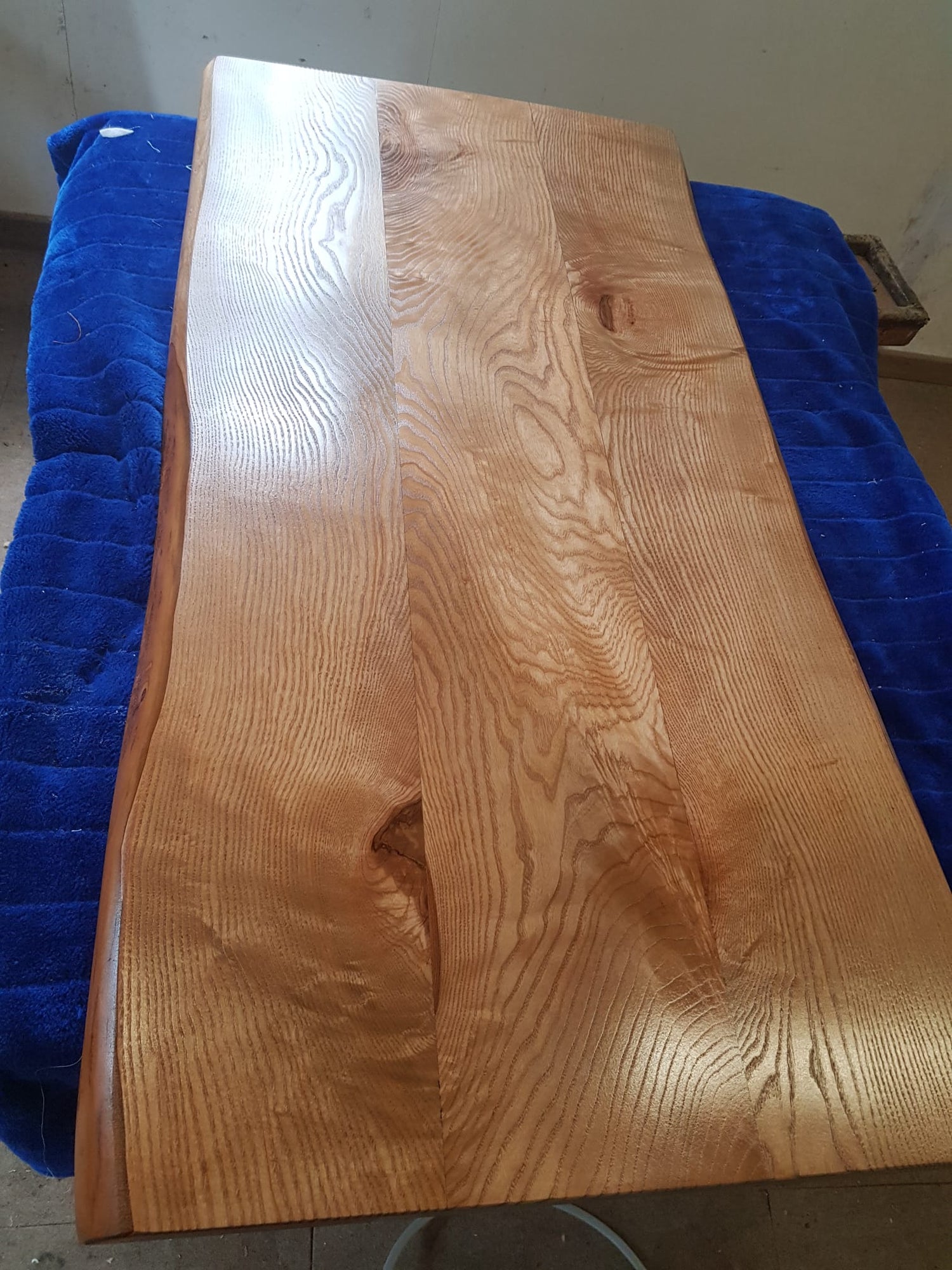
- Joining boards together : Connect planks with dowels or glue for a stable surface.
- Sanding and sealing : Treat the surface with sandpaper and protect it with wood oil, varnish or stain.
Which table legs are suitable for your DIY table?
The choice of table legs affects stability and design.
Table leg options
- Metal legs : Modern, easy to clean, easy to assemble.
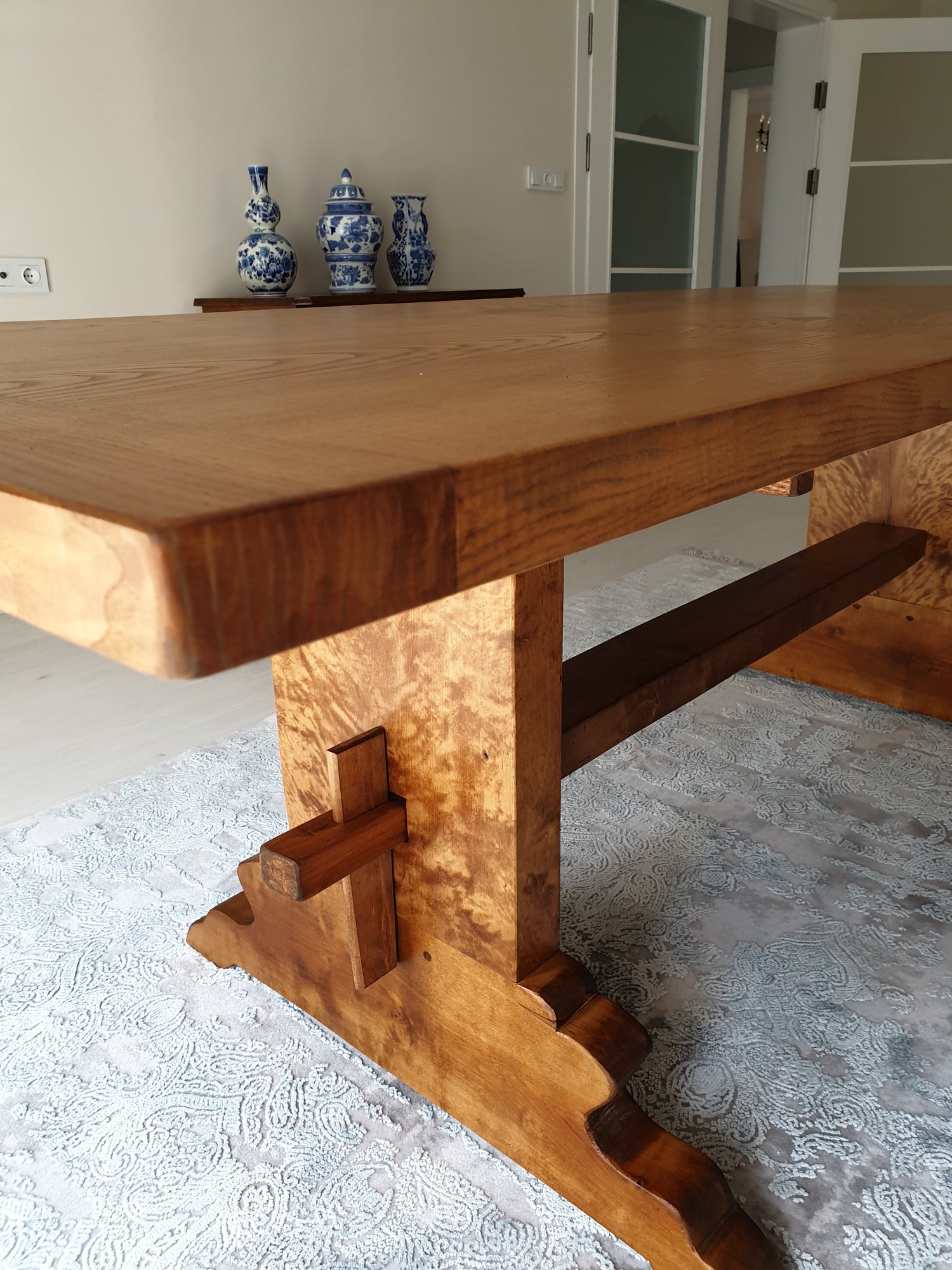
- Wooden legs : Require a substructure made of squared timbers for stability.
Frame assembly
- Stable screw connections : Important for durability and a secure stand.
- Check the angles : To avoid wobbling, everything should be precisely aligned.
Surface treatment: A comparison of wood oils, varnishes and stains
To keep your table looking beautiful for a long time, you should protect the surface.
Surface treatment methods
- Wood oil : Penetrates the wood, protects against moisture, accentuates the grain.
- Paint : Easy to care for, fully protects against water and scratches.
- Stain : Changes the color, preserves the wood structure, requires a final protective varnish.
Sanding and final assembly: Getting the table into top shape
A good finish ensures a pleasant surface.
Steps for grinding
- Start with coarse sandpaper.
- Work your way up to a finer grit until the surface is smooth.
Assembling the table legs
- Metal legs : Simply screw them on.
- Wooden legs : Treat them with oil or varnish for a uniform appearance.
Alternatively: Buy a ready-made table directly.
If you don't want to build a table yourself, you can either choose a high-quality tabletop or buy a ready-made table.
Solid wood tabletops
Discover our range of tabletops in various types of wood:
Finished tables made of solid wood
Our finished solid wood tables offer various options, including different legs and wood types such as oak and ash:
- Ready-made tables made of solid wood in oak or ash
- Oak table with straight legs
- Oak table with spider legs
- Oak table with X-shaped legs
- Ash table
FAQ: Building your own table – Frequently asked questions and answers
1. Which wood is best suited?
Hardwoods like oak, beech, or walnut are durable and easy to care for. Recycled wood is a good option for an industrial look.
2. What height should a dining table be?
The standard height is approximately 76 cm , suitable for most chairs.
3. What are the advantages of metal table legs?
Metal legs are stable, easy to care for , and available in modern designs.
4. Can I order the tabletop online?
Yes, pre-cut solid wood panels in various shapes are available.
5. How do I protect my table from moisture?
- Oil : Regular re-oiling protects the wood.
- Paint : Provides lasting protection against water and scratches.
6. Why should I pre-drill screws?
Pre-drilling prevents the wood from splitting and ensures a more stable connection.
7. Which tabletop is suitable for the industrial look?
Pine or recycled wood are ideal for a rustic style.
8. How thick should a tabletop be?
At least 27 mm to ensure stability and durability.
9. What should I consider when caring for an oiled table?
An oiled table should be re-oiled 2-3 times a year to maintain its protection.
All statements without guarantee.