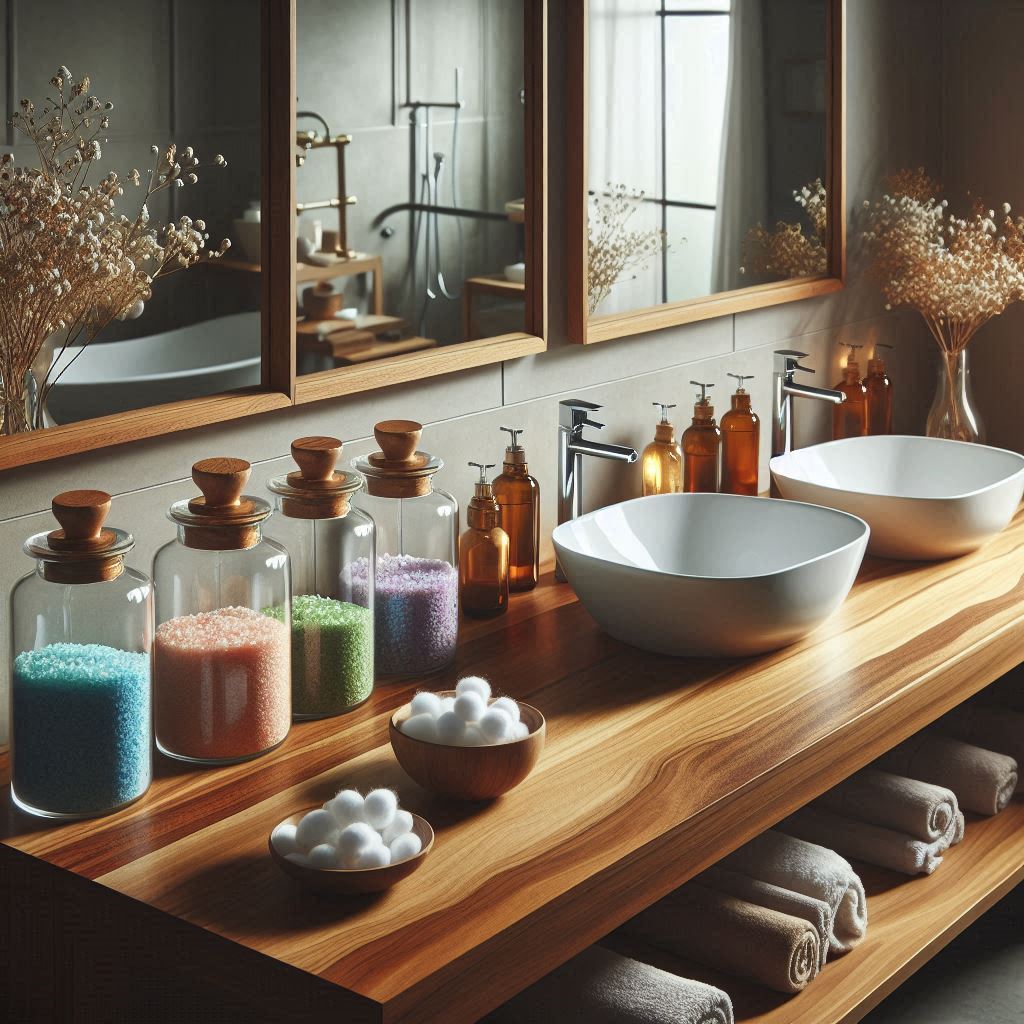
Build your own vanity top or buy one? – A guide to help you decide
Guide: Buy a vanity top or make one yourself?
The bathroom as a wellness oasis
The bathroom is not just a functional space, but also a place for relaxation and aesthetics. The vanity unit is particularly important here, as it should be both practical and stylish. A wooden vanity top, such as one made of oak, can lend your bathroom a warm and elegant touch. But the question often arises: Should you build the vanity top yourself or buy a ready-made one?
Wood for the bathroom: What you should consider
In the past, wood was considered problematic in damp rooms. However, modern treatment methods have changed that. Wood sealed with hard wax oil or varnish can thrive in bathrooms. These protective layers prevent water penetration and preserve the wood's beauty for years to come.
In contrast, MDF panels are susceptible to water damage and require careful sealing to prevent water absorption. Choosing an oak vanity unit allows you to benefit from the natural grain and robustness of the material. This unit can be oiled, waxed, or finished with clear lacquer to ensure its longevity.
Advantages and disadvantages: Build it yourself or buy it?
Advantages of building it yourself
- Individual design : When building it yourself, you have full control over the design, size and type of wood for your vanity top.
- Cost efficiency : You can often save money by doing it yourself, especially if you already have tools and materials.
- Personalization : You can treat and customize the wood to your liking, which is often not possible with purchased boards.
Disadvantages of self-building
- Time required : Building a vanity top can be time-consuming and requires craftsmanship.
- Material selection : Choosing the right wood and preservatives can be complex, especially if you have no experience.
- Lack of warranty : Homemade boards do not have a warranty like purchased products, which poses a risk in case of a problem.
Advantages of buying
- Immediate availability : Finished vanity tops are ready for immediate use and require no additional work.
- Professional workmanship : Purchased panels are usually precisely processed and offer high quality.
- Easy installation : You can rely on proven products that are generally easy to install.
Disadvantages of buying
- Less flexibility : Purchased panels are often available in standard sizes and designs, which limits your design freedom.
- Higher costs : Prefabricated panels can be more expensive than the material costs for a self-build.
Installation and fitting of the washbasin countertop
If you opt for an oak vanity top, consider the weight of the countertop basin. A stable and load-bearing top is crucial, especially if the basin is wall-mounted. The top should be attached to the wall with sturdy brackets. Proper wall preparation is essential, taking into account water pipes and concealed wiring.
Building your own vanity top: A step-by-step guide
- Choose a stable wood : A load-bearing wooden board is the foundation.
- Consider the weight : Make sure the base can support the weight of the countertop basin.
- Seal the wood : Oiling, waxing or varnishing protects the wood from moisture.
- Pay attention to dimensional accuracy : Observe how the wood changes due to moisture and temperature.
- Check suitability : Choose wood that is suitable for damp rooms.
Conclusion: Your decision for the perfect vanity top
Whether you build your own vanity top or buy a ready-made one depends on your personal preferences, your DIY skills, and your budget. A self-built vanity top offers maximum flexibility and individual design, while ready-made tops impress with their immediate availability and professional workmanship.
If you are still looking for a high-quality vanity top, you will find great offers at the Uzun furniture carpentry workshop.
FAQ – Frequently Asked Questions about the Washbasin Countertop
1. Which wood is best suited for a vanity top in the bathroom?
Oak is an excellent choice due to its robustness and resistance to moisture.
2. How do I protect a wooden board from moisture?
Regular oiling, waxing, or varnishing can protect the wood from moisture.
3. Should I build a vanity top myself or buy one?
It depends on your craftsmanship and preferences. DIY allows for individual design, while purchased panels are usually ready for immediate use.
4. How do I install a floating vanity top?
Use sturdy brackets and ensure secure mounting. The wall must be able to support the weight of the washbasin.
5. What to do about water stains on a wooden board?
Water stains can be removed by gently sanding and re-oiling or waxing.
6. How do I properly care for a wooden vanity top?
Clean regularly with a damp cloth and use suitable wood care products to protect the surface.
7. What are the advantages of solid wood compared to MDF boards?
Solid wood is more durable and resistant to moisture than MDF boards, which can swell when they absorb water.
8. Can I use any wooden board for my vanity?
Yes, as long as the board is properly treated and sealed to resist moisture.
9. How often should I renew the protective coating on my vanity top?
It depends on usage, but a regular refresh every few years is recommended.
10. Where can I find high-quality vanity tops?
Visit the Uzun furniture workshop for a wide selection of vanity tops and furniture.
Alternatively: Buy a ready-made table directly.
If you don't want to build a table yourself, you can either choose a high-quality tabletop or buy a ready-made table.
Solid wood tabletops
Discover our range of tabletops in various types of wood:
Table tops made of solid wood in oak or ash
Finished tables made of solid wood
Our finished solid wood tables offer various options, including different legs and wood types such as oak and ash: